
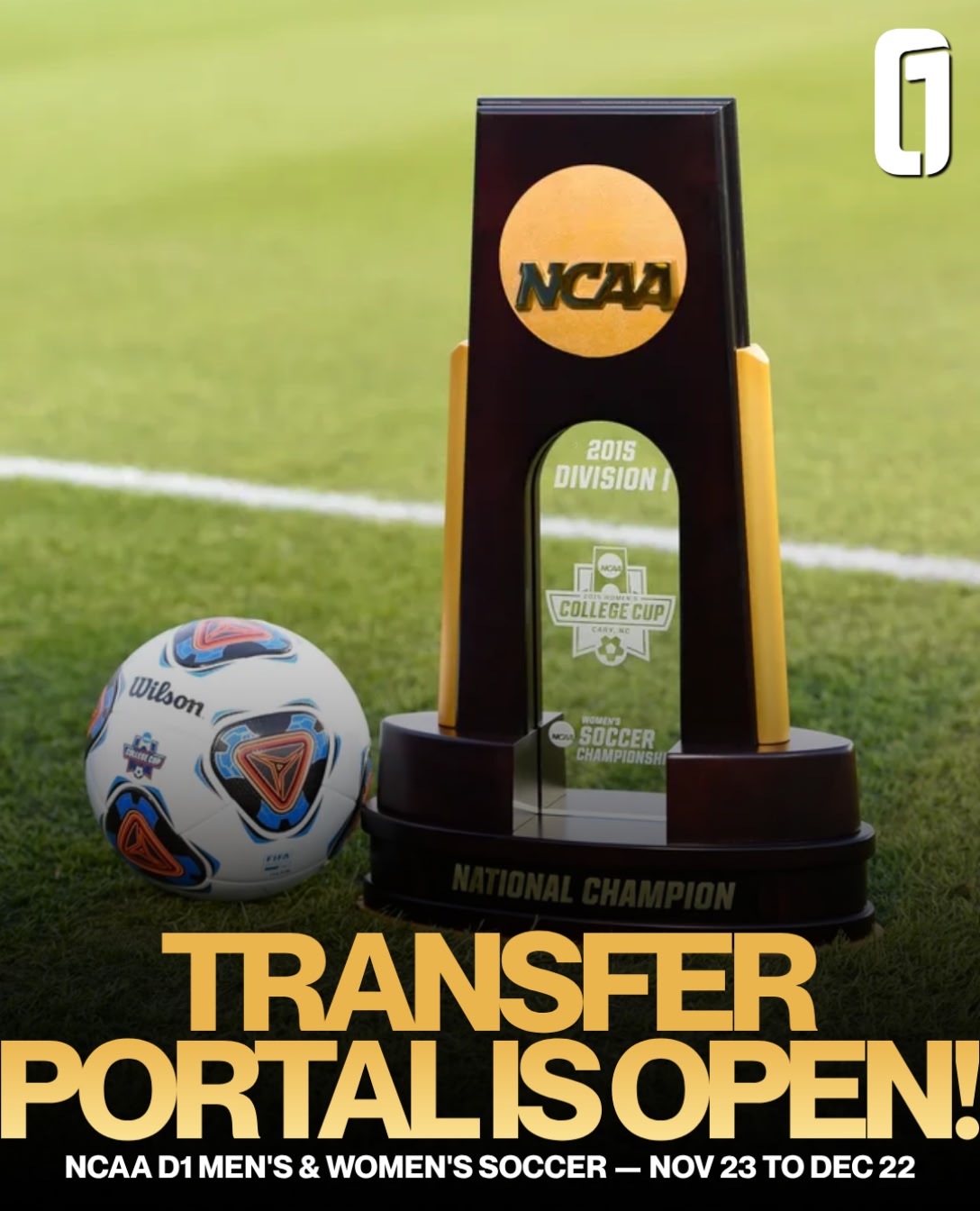
NCAA Division I Soccer Transfer Portal Officially Opens: Everything Players Need to Know About the 2026 Transfer Window
The NCAA Division I men's and women's soccer transfer portal is open from November 23 to December 22, 2026. Here are the key dates, the process, and what players should consider before transferring.
The NCAA Division I soccer transfer portal has officially opened, marking the beginning of one of the most important periods of the year for college soccer players across the United States.
Starting Monday, November 23, 2026, student-athletes competing in NCAA Division I men's and women's soccer can formally enter the transfer portal and begin exploring opportunities at other universities.
The transfer window will remain open for 30 days, closing on December 22, 2026. During this period, eligible players can notify their current institutions of their intention to transfer, making themselves available for recruitment by other collegiate programs.
For players seeking additional playing time, a different academic environment, or a fresh start in their college careers, the transfer portal presents an opportunity to explore new possibilities.
With hundreds of collegiate soccer programs competing across the United States, the coming weeks could bring significant changes to team rosters as coaches look to strengthen their squads ahead of the next season.
Key Dates for the 2026 NCAA Soccer Transfer Portal
The NCAA has established the same transfer window for both men's and women's Division I soccer programs.
November 23, 2026 — Transfer window opens
December 22, 2026 — Deadline to notify the school of intent to transfer
May 1, 2027 — Spring transfer window opens
May 15, 2027 — Spring transfer window closes
The dates are established under the NCAA Division I notification-of-transfer regulations for the 2026–27 academic year.
One of the most important details for student-athletes to understand is that December 22 is the deadline for initiating the transfer notification process, not necessarily the deadline to find or commit to a new university.
Players who properly initiate the process within the designated window can continue communicating with interested programs and exploring their options after the window closes, subject to NCAA recruiting and eligibility regulations.
This distinction gives student-athletes additional time to evaluate potential opportunities rather than rushing into an immediate decision.
What Is the NCAA Transfer Portal?
The NCAA transfer portal is a centralized system that allows student-athletes to notify their institutions of their intention to explore opportunities at other colleges or universities.
Once entered into the system, a player's information becomes accessible to authorized college athletic departments and coaching staffs, allowing other programs to identify athletes who may be interested in transferring.
The portal has become an important part of modern college athletics, particularly as student-athletes seek greater flexibility in managing their academic and athletic careers.
For soccer players, transferring can provide an opportunity to join a program that better aligns with their development goals, preferred playing style, academic interests, or personal circumstances.
However, entering the portal does not automatically guarantee a place on another team, a scholarship offer, or admission into a new university.
The responsibility remains with the student-athlete to research potential programs, communicate with coaches, and determine whether a transfer would genuinely benefit their future.
Why Do College Soccer Players Enter the Transfer Portal?
There are several reasons why a student-athlete might decide to explore transferring to another university.
One of the most common motivations is the desire for increased playing time. Players who have struggled to secure consistent minutes may look for programs where they have a greater opportunity to contribute.
For others, transferring may be about finding a better tactical fit.
Every college soccer program operates differently, with coaching staffs implementing their own philosophies, formations, and player development approaches.
A midfielder who excels in a possession-based system, for example, may find it difficult to showcase their strengths in a team that emphasizes direct attacking football.
Moving to a program with a compatible playing style could provide an opportunity for greater development and improved performances.
Academic considerations can also play a major role.
Student-athletes may wish to pursue a different academic program, relocate closer to family, or attend an institution that better supports their educational and career ambitions.
Additionally, changes in coaching staff, team dynamics, scholarship circumstances, or personal priorities can influence a player's decision.
Ultimately, the transfer portal offers athletes the opportunity to reassess their current situation and consider whether another environment might better support their goals.
How Can Players Enter the Transfer Portal?
For Division I soccer players considering a transfer, understanding the correct process is essential.
Entering the portal is not simply a matter of registering through an online website.
Student-athletes must formally notify their current institution of their intention to transfer, typically by submitting written notification through the university's athletic compliance department.
Under NCAA regulations, the institution is responsible for processing that notification and entering the student-athlete's information into the transfer portal within the applicable administrative deadline.
The NCAA's transfer guidance states that institutions generally must enter a Division I player's information within two business days after receiving a valid request.
Once the player's information becomes available in the portal, authorized coaching staffs from other institutions can identify the athlete and begin permitted recruiting conversations.
Before submitting a request, players should also understand the possible implications for their current athletic financial aid, team status, and future eligibility.
Speaking with an athletic compliance officer can help clarify these considerations before making a final decision.
How Important Are Highlight Videos and Player Profiles?
With numerous student-athletes potentially entering the portal during the same period, standing out to college coaches can be challenging.
This makes preparation an important part of the transfer process.
Coaches evaluating potential transfers often want to understand a player's abilities, experience, academic background, and potential fit within their program.
A strong player profile can help communicate this information clearly.
An effective profile should include relevant details such as the player's position, current university, athletic experience, academic information, and contact details.
Highlight videos are particularly valuable because they allow coaches to quickly evaluate a player's technical abilities, decision-making, physical attributes, and contributions during matches.
For outfield players, clips should demonstrate relevant qualities for their position, such as passing range, defensive awareness, movement, finishing, or creativity.
Goalkeepers should focus on showcasing shot-stopping ability, distribution, positioning, communication, and decision-making.
However, players should avoid relying exclusively on highlight footage.
Some coaches may request full-match recordings to better understand how an athlete performs throughout an entire game, including moments when they are not directly involved in the action.
Having both highlight videos and full-match footage readily available can help players respond quickly when opportunities arise.
The Growing Importance of Networking and Recruitment
The transfer portal has also increased the importance of building professional relationships within the college soccer community.
With programs evaluating potential transfers during a relatively short period, players who understand how to communicate professionally and present themselves effectively may be better positioned to attract interest.
Coaches are not simply looking for talented individuals. They are searching for players who can address specific needs within their teams.
A program may require an experienced centre-back, a creative midfielder, a reliable goalkeeper, or a forward capable of contributing immediately.
Understanding these requirements can help players identify opportunities that genuinely match their abilities.
Rather than contacting every program available, student-athletes may benefit from researching universities that align with their academic interests, playing level, position, and long-term ambitions.
Professional communication is equally important.
When contacting coaches, players should introduce themselves clearly, explain their interest in the program, and provide relevant information that makes evaluating their profile straightforward.
Following up appropriately and remaining organized throughout the process can also make a positive impression.
Players must ensure that any contact and recruitment activity complies with applicable NCAA transfer and recruiting regulations.
What Should Players Consider Before Transferring?
Although the transfer portal offers valuable opportunities, changing universities is a significant decision that should not be taken lightly.
Before committing to another program, players should evaluate the broader implications of transferring.
Playing time is often a major factor, but there are other important considerations.
The coaching staff's philosophy, the level of competition, available academic programs, financial assistance, campus environment, and long-term player development opportunities should all influence the decision.
Players should also understand how transferring could affect their academic credits, graduation timeline, and athletic eligibility.
Although NCAA Division I rules provide opportunities for eligible transfers to compete immediately, individual circumstances and academic requirements can affect whether an athlete is permitted to participate at a new institution.
Another important consideration is the possibility of remaining at the current university.
Entering the transfer portal does not automatically secure an alternative opportunity, and a player's current position or financial aid arrangements may be affected.
For this reason, players should approach the process with a clear understanding of their priorities and the potential risks involved.
A successful transfer should support both athletic development and academic progress.
How the Transfer Portal Is Changing College Soccer
Over recent years, the transfer portal has become an increasingly influential factor in how college soccer programs build and maintain their rosters.
Traditionally, recruitment focused heavily on identifying high school prospects, academy players, and international student-athletes.
While those pathways remain important, coaches can now also evaluate experienced college players who may be capable of contributing immediately.
For programs looking to address specific weaknesses, recruiting through the portal offers opportunities to bring in athletes who already understand the demands of collegiate competition.
At the same time, the increased movement of players presents challenges for coaching staffs.
Maintaining squad continuity, developing long-term team chemistry, and planning future recruitment have become increasingly important considerations.
A player who performs well during one season may decide to explore other opportunities the following year, requiring coaches to regularly reassess their roster needs.
For student-athletes, this changing environment creates both opportunities and additional competition.
The ability to transfer provides greater flexibility, but it also means players must be prepared to demonstrate their value when competing for opportunities at other universities.
As college soccer continues to evolve, the transfer portal is likely to remain a significant part of the recruitment and team-building process.
OPSM Connect: Helping Players Prepare for Their Next Opportunity
For players considering entering the 2026 transfer portal, having the right resources and exposure can make an important difference.
Through OPSM Connect, student-athletes can build their player profiles, showcase their highlight videos, and increase their visibility within the broader soccer community.
The platform is designed to help players present their abilities, athletic experience, and achievements while creating opportunities to develop their professional networks.
For athletes exploring a transfer, having an organized profile and accessible highlight footage can make it easier to share relevant information with interested programs.
OPSM Connect also provides players with access to services and resources intended to support their athletic development and career progression.
While no platform can guarantee recruitment or a scholarship, building a strong player profile is an important step toward presenting yourself professionally.
Players interested in improving their visibility and preparing for future opportunities can learn more at OPSM Connect.
A New Chapter Begins for College Soccer Players
With the NCAA Division I men's and women's soccer transfer portal officially open, the next 30 days represent an important period for student-athletes across the country.
For some players, entering the portal may provide the opportunity to secure more playing time and continue their development in a new environment.
For others, it could represent a chance to pursue different academic opportunities, compete at a higher level, or take the next step toward their long-term ambitions.
However, the transfer process requires preparation, research, and careful decision-making.
Players should understand the NCAA's regulations, communicate with their institutions, prepare their recruitment materials, and evaluate potential opportunities based on both their athletic and academic goals.
The 2026 transfer window officially runs from November 23 to December 22, giving NCAA Division I soccer players an important opportunity to take greater control of their collegiate careers.
For those seeking a fresh start, more playing time, or a new challenge, this transfer window could mark the beginning of an exciting new chapter.
The portal is officially open. The opportunities are out there, and the next move could shape the future of a player's college soccer career.